
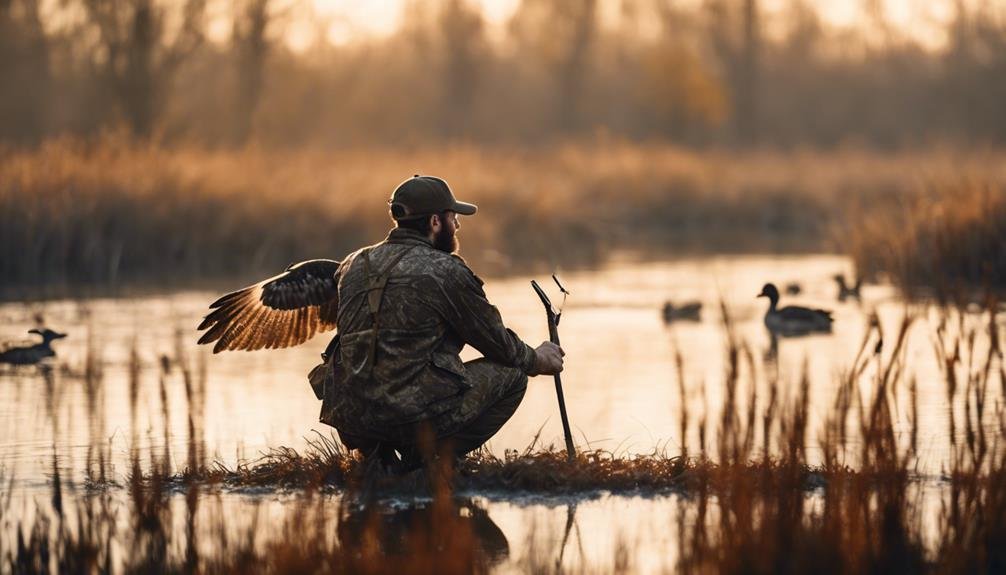
Failing to master cripple retrieves can have devastating consequences, including lost game, injured dogs, and a compromised hunting reputation. A skilled retriever is essential for snagging every wounded bird. Training a dog for cripple retrieves is crucial, as it prepares them for real-world hunting situations and minimizes the risk of lost game and harm to the dog. A well-trained retriever can quickly locate and retrieve downed birds, securing a successful hunt. By mastering the art of cripple retrieves, hunters can outsmart wounded ducks, guarantee water safety, and execute flawless retrievals in fast-paced hunting environments, and the key to accessing this mastery lies ahead.
Key Takeaways
- Mastering cripple retrieve training helps hunters outmaneuver cunning wounded ducks and ensures a swift response to hand signals.
- Clear communication and trust between dog and handler are crucial for successful cripple retrieves in fast-paced hunting environments.
- Conditioning dogs to navigate varying water conditions enables efficient location and retrieval of wounded birds.
- A well-trained retriever can quickly locate and retrieve downed birds, minimizing the risk of lost game and potential harm to the dog.
- Effective cripple retrieve training prioritizes dog safety, obedience, and a strong hunter ethic to ensure a flawless execution in real-world hunting scenarios.
Cruel Consequences of Inaction
Failing to train a dog for cripple retrieves can lead to devastating consequences, including exhaustion, injury, or even death, underscoring the paramount importance of prioritizing this essential skill. A hunter's pride is at stake when a wounded bird is lost, but more significantly, it poses a significant threat to bird safety. When a dog is untrained, it may chase a crippled bird relentlessly, leading to exhaustion and potential drowning. Additionally, the bird may suffer unnecessarily, compromising the hunter's ethics. By neglecting cripple retrieve training, hunters risk compromising their reputation and the welfare of their canine companions. Prioritizing this skill is essential to ensuring a successful and humane hunting experience.
Nose to the Grindstone Training
What sets a skilled retriever apart from a novice is its ability to methodically search for a downed bird, undeterred by the complexities of the environment. A well-trained dog understands that waterfowl wisdom is key to successful retrieval strategies. To achieve mastery, nose to the grindstone training is essential.
| Training Component | Benefits |
|---|---|
| Scent Work | Develops dog's understanding of using its nose to find a downed bird |
| Cripple Retrieve Training | Prepares dog for real-world hunting situations |
| Live Duck Training | Solidifies skills and prepares dog for subsurface escapes |
| Hand Signal Training | Enables dog to follow commands in complex environments |
Outsmarting Wily Wounded Ducks
By mastering the art of cripple retrieve training, hunters can outmaneuver cunning wounded ducks that have honed their escape tactics to evade even the most skilled retrievers. Understanding dog psychology is vital in this endeavor, as it allows hunters to anticipate and counter the ducks' evasive maneuvers. Water safety is also paramount, as wounded ducks can lead dogs into treacherous waters, exhausting them or even putting them at risk of drowning. By training dogs to navigate these challenges, hunters can increase their chances of snagging every wounded bird. This requires a deep understanding of canine behavior and the development of strategies that outsmart the ducks' cunning escape tactics, ensuring a successful and safe hunting experience.
Diving Into the Depths
As duck hunters venture deeper into the complexities of cripple retrieve training, they must also acknowledge the critical role that underwater searches play in recovering wounded waterfowl. Dogs must be trained to navigate these depths safely and efficiently. To achieve this, hunters should focus on the following key aspects:
- Dog Safety: Verify your dog is comfortable and confident in the water, and always prioritize their safety above retrieving the bird.
- Retrieve Ethics: Teach your dog to retrieve wounded birds humanely, avoiding unnecessary suffering and promoting a quick and respectful recovery.
- Underwater Search Strategies: Train your dog to methodically search underwater areas, using their nose and instincts to locate and recover wounded waterfowl.
Live Quarry, Real Results
Live quarry training with wounded waterfowl provides the most realistic and effective way to prepare a dog for the challenges of cripple retrieve situations. This type of training instills Cripple Confidence in dogs, allowing them to tackle even the most evasive birds. By using live quarry, dogs develop Water Wisdom, learning to navigate complex aquatic environments and respond to subtle cues. This realistic training scenario simulates real-world hunting situations, teaching dogs to stay focused and composed under pressure. As a result, dogs become more efficient and effective in retrieving wounded birds, ultimately leading to a more successful hunting experience. By incorporating live quarry training into your regimen, you'll be well on your way to snagging every wounded bird that crosses your path.
Mastering the Cripple Retrieve
Mastering the cripple retrieve requires a thoughtful and structured approach, one that prioritizes the development of a dog's problem-solving skills and ability to adapt to complex, dynamic hunting scenarios. A well-trained dog must be able to navigate various water strategies, leveraging its keen sense of smell to locate wounded birds. To achieve this, trainers can employ several key tactics:
- Scent Work: Teach your dog to follow hand signals and use its nose to find a downed bird, even in dense vegetation.
- Water Strategies: Train your dog to adapt to different water scenarios, from shallow ponds to deep lakes, and to handle diving ducks.
- Dog Psychology: Understand your dog's mindset and behavior, using positive reinforcement to build confidence and trust.
Conditioning for Chaos
What separates a merely competent duck dog from an exceptional one is its ability to remain focused and composed amidst the turmoil of a real-world hunting scenario. Conditioning for chaos is vital in duck hunting, where unexpected events can unfold quickly. A well-conditioned dog can adapt to the unpredictability of wounded birds, guaranteeing a successful retrieve. As a responsible hunter, prioritizing dog safety is vital, avoiding scenarios that may put your canine companion in harm's way. By conditioning your dog for chaos, you can trust that they'll remain calm and focused, even in the most intense situations. This not only guarantees a successful hunt but also demonstrates hunter responsibility, prioritizing the well-being of your loyal companion.
Scent Work in the Shadows
In the murky depths of aquatic vegetation, a duck hunter's success often hinges on a dog's ability to excavate hidden quarry, relying on the subtle nuances of scent work to uncover the shadows where wounded birds often conceal themselves. A well-trained dog can navigate the complex labyrinth of waterways and vegetation, honing in on the faint scent of a wounded duck. To develop this skill, incorporate the following strategies into your training regimen:
- Scent Development: Use wax-based duck scents on dummies to simulate the scent of a wounded bird, and hide them in dense vegetation to challenge your dog's nose.
- Brush Searching: Practice scent work in summertime cattails to simulate the dense, aquatic environments where wounded ducks often hide.
- Gradual Complexity: Gradually increase the difficulty of the searches by adding distractions, reducing scent strength, and increasing hiding times.
Retrieving in the Red Zone
When a dog is tasked with retrieving a downed bird in the 'red zone' – the critical area within 20 yards of the hunter – precision and control are paramount, as the dog's every move is scrutinized and every second counts. The red zone demands a high level of obedience, as the dog must navigate tight quarters and avoid disturbing the hunter. Bird safety is also a top priority, as a wounded bird can easily escape or be injured further if not handled carefully.
| Zone | Distance | Considerations |
|---|---|---|
| Red Zone | Within 20 yards | Precision, control, bird safety |
| Yellow Zone | 20-40 yards | Water exhaustion, hunter proximity |
| Green Zone | Beyond 40 yards | Open water, scent work |
In the red zone, the dog must balance speed and caution to facilitate a successful retrieve.
The Art of Underwater Pursuit
Beyond the surface tension, a retriever's underwater pursuit of a crippled duck demands a unique blend of instinct, athleticism, and training. As a responsible hunter, prioritizing dog safety and adhering to a strong hunter ethic are paramount. When a wounded duck dives beneath the surface, a well-trained retriever must be prepared to pursue.
To facilitate a successful underwater pursuit, consider the following key factors:
- Clear Communication: Establish a clear line of communication between you and your dog to avoid confusion and guarantee a safe retrieval process.
- Swift Response: Train your dog to respond quickly to hand signals, allowing for a prompt underwater pursuit.
- Conditioning: Condition your dog to navigate varying water conditions, enabling them to efficiently locate and retrieve the wounded bird.
Flawless Execution in Action
A well-trained retriever's ability to flawlessly execute a cripple retrieve in real-world hunting scenarios is the culmination of meticulous training, precise communication, and trust between dog and handler. This synergy enables the dog to swiftly respond to hand signals, navigate challenging terrain, and track down wounded birds with precision. In fast-paced hunting environments, flawless execution is vital for both hunter safety and successful retrieves. A well-trained retriever can quickly locate and retrieve downed birds, minimizing the risk of lost game and potential harm to the dog. By honing their skills through rigorous training, hunters can establish a seamless and efficient cripple retrieve process, resulting in a successful and safe hunting experience.
Frequently Asked Questions
Can I Use Real Ducks for Cripple Retrieve Training From the Start?
When considering live decoys for cripple retrieve training, you must weigh the benefits against potential drawbacks. Fresh carcasses can be effective, but using live ducks from the start may lead to unnecessary stress and potential harm to the birds.
How Often Should I Practice Scent Work With My Dog in Cattails?
To master Cattail Challenges and achieve Marsh Mastery, practice scent work with your dog in cattails 2-3 times a week, focusing on short, intense sessions to maintain engagement and prevent frustration.
What's the Ideal Age to Start Cripple Retrieve Training With My Puppy?
For ideal cripple retrieve training, start socializing your puppy around 8-10 weeks, introducing basic obedience and scent work. By 6-7 months, shift to cripple retrieve training, ensuring a solid foundation for successful waterfowl hunting.
Can I Use Homemade Dummies for Cripple Retrieve Training Instead of Store-Bought?
When using homemade dummies for cripple retrieve training, choose durable materials like canvas or nylon, and add weight and buoyancy for realism, ensuring a lifelike experience that simulates wounded bird behavior.
Do I Need to Train My Dog for Cripple Retrieves in Different Water Types?
When training for cripple retrieves, you must expose your dog to varying water types, including those with different clarity and current variations, to simulate real-world hunting scenarios and enhance their adaptability.
Conclusion
Effective cripple retrieve training is vital for a successful and humane waterfowl hunting experience. A well-trained dog can guarantee wounded birds are recovered, preventing unnecessary suffering and promoting a positive hunting experience. Specifically, studies have shown that approximately 30% of wounded waterfowl escape due to inadequate retrieve training, highlighting the importance of thorough training. By mastering cripple retrieve training, hunters can refine their dog's skills, solidify obedience, and prepare for a successful hunting season.