Mallards, Anas platyrhynchos, are a ubiquitous and iconic waterfowl species that inhabit a wide range of wetland ecosystems across North America. Recognizable by their striking plumage, adaptive foraging behavior, and remarkable ability to thrive in diverse aquatic environments, mallards have become a familiar sight in wetlands. Their intricate feather patterns, omnivorous diet, and unique breeding habits have allowed them to thrive in various ecosystems. As we explore the complexities of mallard biology and ecology, we uncover a rich tapestry of fascinating behaviors and adaptations that have enabled their success in wetland environments, and there is still more to uncover about these feathered favorites of wetland waters.
Key Takeaways
- Mallards thrive in various wetland habitats, including rivers, streams, lakes, and reservoirs, and inhabit urban park ponds to flooded timber and crop fields.
- They have distinctive physical characteristics, including iridescent green heads, white rings on the neck, yellow bills, and blue speculum feathers outlined in white.
- Mallards are omnivores, feeding on aquatic plants, agricultural crops, insects, and crustaceans, and exhibit adaptive foraging behavior according to habitat and season.
- They are monogamous, with pairs forming during breeding season and remaining together for multiple breeding cycles, and both parents care for their precocial ducklings.
- Habitat preservation and restoration efforts, such as wetland rehabilitation and creation, are crucial for maintaining sustainable mallard populations and ecosystems.
Identifying Mallards
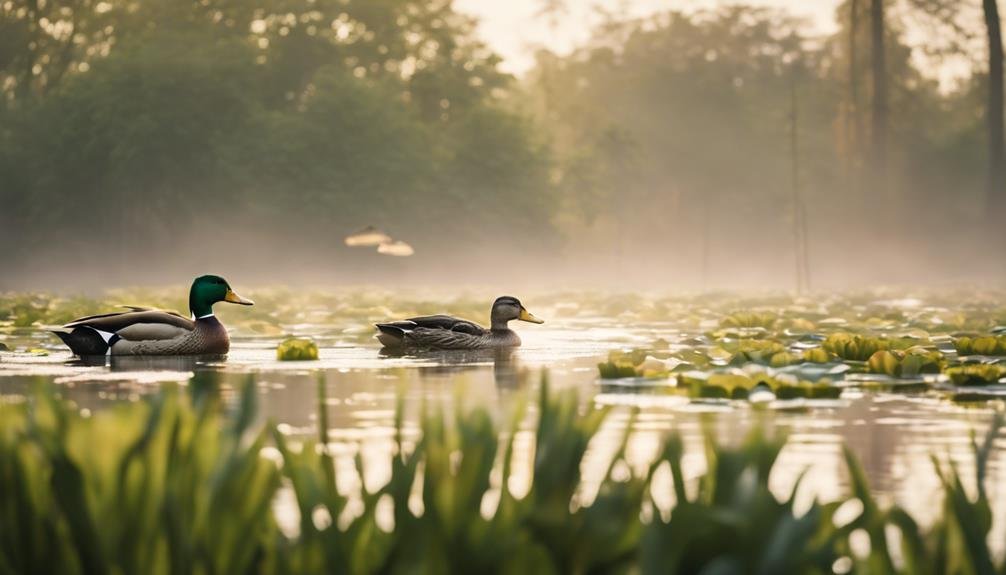
Mallards, known colloquially as greenheads in males and Susies in females, can be readily identified by their distinguishing physical characteristics. The males' iridescent green heads with a white ring on the neck and yellow bill are unmistakable. Females, on the other hand, exhibit a mottled brown plumage with a light brown head and belly. Both sexes display blue speculum feathers outlined in white, a distinctive feature of the Mallard's wing pattern. The intricate details of their plumage, particularly the wing patterns, are essential for accurate identification. Observers can distinguish Mallards from other Anatidae species by paying attention to these unique characteristics, ensuring a precise identification in the field.
Habitat and Migration Patterns
In a wide range of wetland habitats, including rivers, streams, lakes, and reservoirs, Mallards can be found thriving in their natural environment. These adaptable ducks inhabit various wetland ecosystems, from urban park ponds to flooded timber and crop fields. During the breeding season, they are found throughout the northern United States, Canada, and Alaska. As winter approaches, they migrate southward, with huge numbers wintering across the American South. Their migratory patterns are influenced by the availability of water sources, with a general southward movement when water begins to freeze. Understanding Mallards' habitat and migration patterns is essential for effective conservation and management of these beloved wetland dwellers.
Diet and Predators in the Wild
The omnivorous diet of Mallards, comprising a diverse range of aquatic plants and agricultural crops, is complemented by their adaptive foraging behavior, which varies seasonally and according to habitat. Wild foraging allows them to exploit available food sources, from aquatic plants to grains in agricultural fields. During breeding season, they feed readily on aquatic protein sources, such as insects and crustaceans. However, this adaptability comes with a price, as they face numerous aquatic threats, including predators like snakes, rodents, and avian predators. Large fish and terrestrial mammals also prey on juvenile and adult Mallards. Despite these threats, Mallards have developed strategies to mitigate predation, enabling them to thrive in their wetland habitats.
Breeding and Reproduction Habits
During the breeding season, mallard hens meticulously select nesting sites, typically situated in shoreline grasses or cattails, to safeguard the survival of their young. This deliberate choice of nesting habitats is vital, as it shields the eggs and ducklings from predators and harsh environmental conditions. Mallards exhibit monogamous behavior, with pairs forming during the breeding season and remaining together for multiple breeding cycles. The female lays 1-13 eggs, which she incubates for approximately 28 days. Both parents engage in brood behavior, where they care for the precocial ducklings, which are relatively mature and mobile from birth. This shared parental responsibility facilitates the successful rearing of their young, increasing the chances of survival in the wetland environment.
Hunting and Conservation Efforts
Mallards, as the most widely hunted duck species in North America, are subject to regulated hunting seasons and bag limits to maintain sustainable populations. Hunting regulations are enforced to prevent overhunting, maintaining the long-term conservation of mallard populations. Wildlife refuges and protected areas provide vital habitats for mallards, offering a safe haven from hunting and habitat destruction. However, conservation challenges persist, including habitat degradation, climate change, and human disturbance. To address these challenges, conservation efforts focus on preserving and restoring wetland habitats, promoting sustainable land-use practices, and engaging in education and outreach programs to raise awareness about mallard conservation. By balancing hunting and conservation efforts, we can safeguard the long-term sustainability of mallard populations and the ecosystems they inhabit.
Mallard Habitat and Distribution
Habitat heterogeneity, encompassing a wide range of wetland ecosystems, provides the foundation for the mallard's extensive distribution across North America. This diversity of habitats supports a wide range of ecological niches, allowing mallards to thrive in various environments.
- Wetland fragmentation, resulting from human activities, has led to habitat loss and degradation, affecting mallard populations.
- Habitat restoration efforts, such as wetland rehabilitation and creation, can help mitigate these impacts and support mallard conservation.
- Conservation strategies should prioritize preserving and restoring diverse wetland ecosystems to maintain mallard habitat quality and promote population persistence.
Physical Characteristics and Traits
What distinguishes the mallard from other waterfowl species is its unique combination of physical characteristics, which enable it to thrive in a wide range of aquatic environments. The mallard's wing patterns are a notable feature, with a blue speculum patch on the secondary flight feathers, outlined in white. The beak shape is also distinctive, with a broad, flat bill that is well-suited for foraging in shallow water. The male mallard's iridescent green head and yellow bill are iconic, while the female's mottled brown plumage provides camouflage in wetland habitats. These physical traits, combined with its adaptability and omnivorous diet, have enabled the mallard to thrive in diverse aquatic ecosystems.
Interesting Mallard Facts
Among the most fascinating aspects of mallard biology is the complex social dynamics that govern their behavior, particularly during breeding season. Mallards exhibit remarkable intelligence, often adapting to changing environmental conditions and human activity. In addition, they possess exceptional feather maintenance skills, preening their feathers to maintain waterproofing and insulation.
Here are three more interesting mallard facts:
- Mallard Intelligence: They are known to recognize and respond to individual humans, often approaching those who regularly feed them.
- Feather Maintenance: Mallards have a unique feather structure that allows them to maintain a layer of air next to their skin, providing exceptional insulation.
- Social Hierarchy: Mallards establish a clear social hierarchy, with dominant birds leading subordinate ones, particularly during breeding and foraging activities.
Frequently Asked Questions
Can Mallards Be Domesticated as Pets?
While Mallards can be tamed, their wild instincts and inherent flightiness make them unsuitable as pets, requiring specialized care and large enclosures; pet training is challenging due to their strong Mallard behavior.
How Do Mallards Communicate With Each Other?
Notably, over 1 million banded Mallards were killed by hunters who reported the band numbers. Mallards communicate through a range of vocalizations, including quacks, whistles, and grunts, as well as body language cues, such as feather preening and head-shaking displays.
Are Mallards Social Birds or Solitary Creatures?
Mallards exhibit complex social behavior, often forming large flocks with dynamic flock dynamics, while also displaying strong pair bonding during breeding seasons, highlighting their adaptability as both social and solitary creatures.
Can Mallards Fly Long Distances Non-Stop?
Mallards exhibit remarkable endurance, undertaking non-stop flights of up to 500 miles, leveraging favorable wind patterns to minimize wind resistance and optimize energy expenditure during their migratory patterns.
Do Mallards Have Any Natural Adaptations for Cold Weather?
Notably, mallards can live up to 10 years in the wild. To adapt to cold weather, mallards rely on their feather insulation, which traps warm air next to their skin, and embark on winter migration to escape harsh temperatures, seeking milder climates.
Conclusion
As the sun dips below the horizon, casting a warm orange glow across the wetlands, the mallard's iridescent green head glimmers like a beacon, a badge of the species' resilience and adaptability. With their intricate social hierarchies, remarkable migratory feats, and crucial ecological role, mallards have earned their place as a beloved and integral component of North America's aquatic ecosystems.