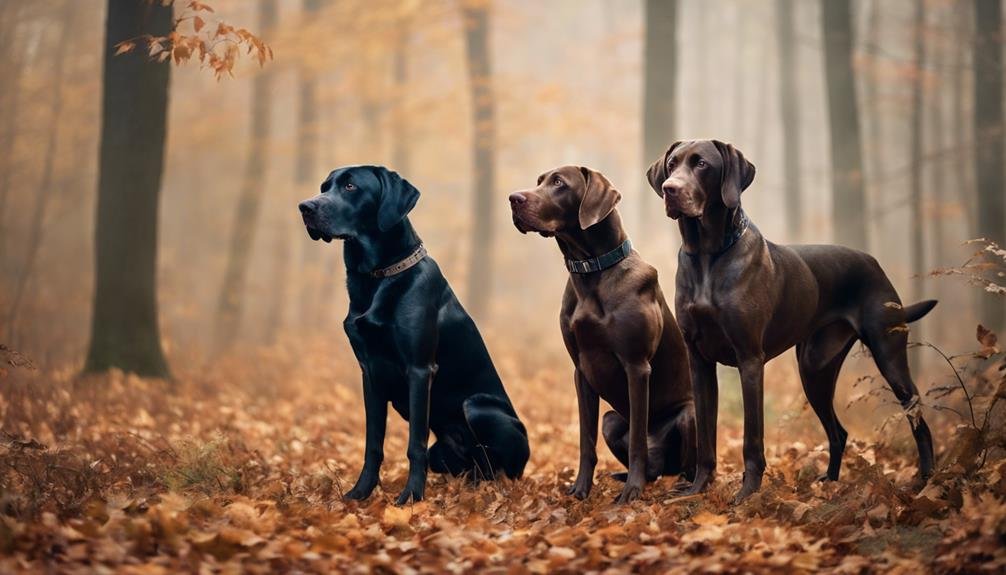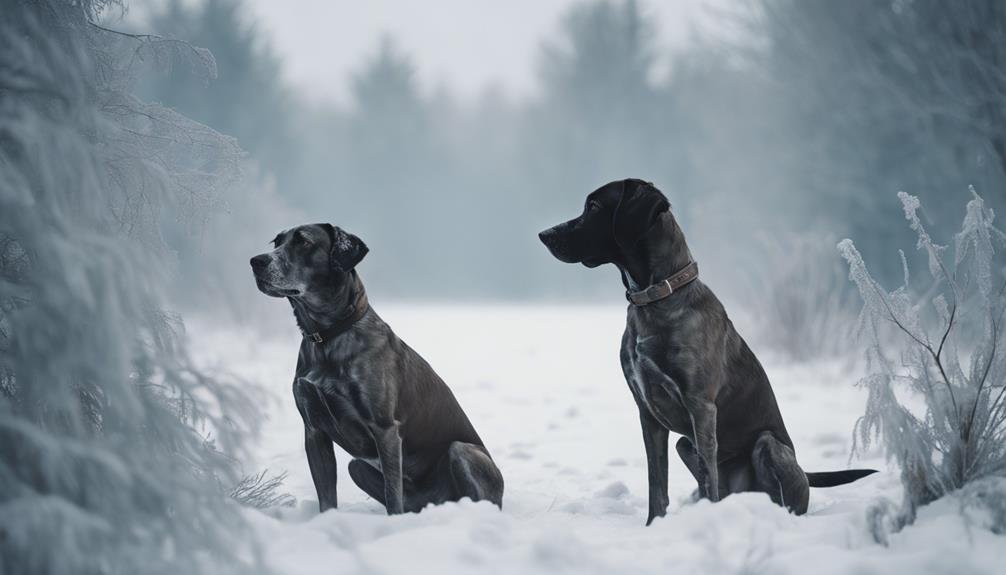
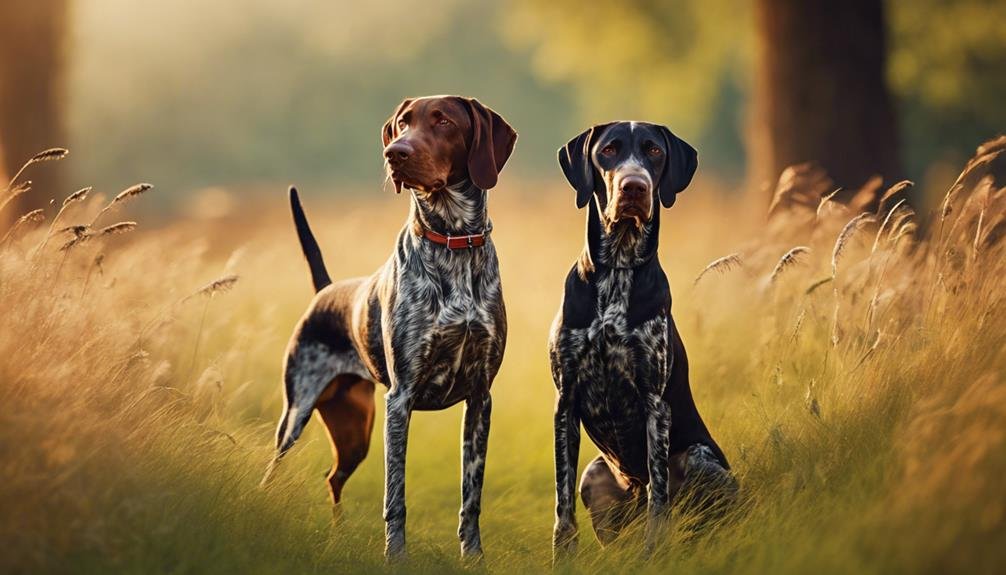
Beyond the spotlight, three underrated bird dog breeds – the English Cocker, Drahthaar, and Standard Poodle – await discovery, each with unique characteristics tailored to distinct hunting environments. The English Cocker's agility and enthusiasm make it perfect for dense cover, while the Drahthaar's independence and intelligence excel in big cover and upland country. The Standard Poodle's incredible nose and athleticism thrive in grouse woods and pheasant fields. As we venture deeper, the secrets of these exceptional companions are revealed, and the possibilities for a lifelong hunting partnership unfold.
Key Takeaways
- English Cocker, Drahthaar, and Standard Poodle are underrated bird dog breeds that excel in distinct hunting environments.
- Each breed boasts unique characteristics, such as agility, intelligence, and strong prey drive, making them exceptional companions.
- Consistent training, positive reinforcement, and early socialization are crucial for developing a well-rounded hunting partner.
- Hunters should research and understand breed strengths, weaknesses, and suitability for specific hunting environments to select the right breed.
- Effective communication methods, including vocal cues and hand signals, are vital for a seamless partnership in the field.
Underrated Breeds Uncovered
In the domain of bird dog breeds, a trio of underrated yet exceptional companions await discovery, each possessing unique characteristics that make them ideal for distinct hunting environments. The English Cocker, Drahthaar, and Standard Poodle are often overlooked, but they boast exceptional hunting dynamics and breed loyalty. The English Cocker's agility and enthusiasm make it perfect for dense cover, while the Drahthaar's independence and intelligence excel in big cover and upland country. The Standard Poodle's incredible nose and athleticism thrive in grouse woods and pheasant fields. These breeds are bursting with personality, loyal to their owners, and respond well to structured training. By recognizing their strengths, hunters can tap the full potential of these underrated breeds, forming a lifelong partnership that will elevate their hunting experience.
Unleashing the English Cocker
With their irrepressible enthusiasm and agility, the English Cocker is poised to revolutionize the hunting experience, effortlessly traversing dense cover with a zeal that's simply infectious. As a Cocker Spaniel breed, they excel in dense cover, making them perfect for pheasant and grouse hunting. Their compact size allows them to navigate tight spaces with ease, making them an ideal choice for upland game bird hunting. Training is key, and early socialization is vital for developing a well-rounded hunting partner. With consistent training and positive reinforcement, English Cockers can thrive in the field, providing an unforgettable hunting experience for their owners. Their loyalty and affection towards their owners make them a beloved companion, both in and out of the field.
The Drahthaar Difference
Germany's Drahthaar breed, forged from a rich heritage of pointing dogs, has earned a reputation for fearlessness and tenacity in the upland game bird arena. This German breed's dynamics are rooted in its history, making it an exceptional hunting companion. With its strong prey drive and keen sense of smell, the Drahthaar excels in dense cover and open fields alike.
| Trait | Description |
|---|---|
| Intelligence | High, responds well to structured training |
| Independence | Moderate, adapts to new cover and maintains contact with the gun |
| Drive | High, needs management and stimulation |
| Loyalty | High, forms strong bond with owner |
| Hunting Style | Fearless and tenacious, excels in upland game bird arena |
The Drahthaar's German heritage shines through in its robust build and athletic ability, making it an ideal breed for hunters seeking a reliable and skilled partner.
Standard Poodles in the Field
Standard Poodles, renowned for their elegant appearance, surprisingly excel in the rugged world of bird hunting, their intelligence, athleticism, and strong prey drive making them a formidable force in the field. Their Poodle Performance is impressive, with a keen sense of smell and agility that allows them to navigate dense cover with ease. However, their high-maintenance coat presents Grooming Challenges, requiring regular trimming and clipping to prevent matting and tangling. Despite this, their hunting prowess and loyalty to their owners make them a valuable asset in the field. With proper training and care, Standard Poodles can thrive as exceptional bird dogs, proving that beneath their refined exterior lies a rugged and capable hunting companion.
Researching the Right Breed
As hunters begin their search for the perfect bird dog breed, they undertake a journey that requires meticulous research, careful consideration, and a deep understanding of their own hunting style and needs. To thoroughly investigate the breed's reputation, exploring its strengths, weaknesses, and suitability for specific hunting environments is vital. A reputable breeder is also vital, as they can provide valuable insights into the breed's temperament, athleticism, and health. A breeder's reputation is built on transparency, honesty, and a commitment to breeding healthy, well-tempered dogs. By doing their due diligence, hunters can find a breed that not only excels in the field but also becomes a loyal companion. With the right breed and breeder, the journey to finding the perfect hunting partner becomes a thrilling adventure.
Selecting a Healthy Puppy
When bringing a new puppy into the fold, one essential consideration is the pup's overall health, a factor that can make or break a lifelong partnership between hunter and dog. A healthy puppy is indispensable for a successful hunting partnership, and selecting the right one requires careful consideration. Puppy socialization is key, as it lays the foundation for a well-adjusted and confident dog. Look for breeders who prioritize socialization and provide health guarantees for their puppies. A reputable breeder will have conducted necessary health testing and provide clearance certificates. A healthy puppy is more likely to grow into a strong, capable hunting partner, making the extra effort in selection well worth it.
Effective Communication Methods
In the midst of a chaotic hunting environment, a well-trained dog's ability to decipher its handler's cues can mean the difference between a successful hunt and a fruitless excursion. Effective communication methods are vital in the field, where distractions abound and clear instructions are paramount. A handler's vocal cues, paired with subtle canine body language, can create a seamless partnership. The shrill pitch of a dog whistle can cut through the din, conveying commands to the dog. By honing in on these auditory and visual cues, the dog can focus on the task at hand, filtering out extraneous noise and distractions. A well-tuned canine ear, attuned to the handler's signals, is the key to a successful hunt.
Hand Signals in the Field
On the windswept fields and marshy wetlands, hand signals emerge as a crucial component of a hunter's toolkit, silently conveying commands to their canine companion amidst the cacophony of nature. In the midst of rustling reeds and chirping birds, verbal cues can be lost, but hand signals bridge the gap, allowing hunters to communicate effectively with their bird dogs. Silent cues, such as a raised arm or a sweeping motion, become a language that transcends the din of the environment. Gestural communication enables hunters to convey complex commands, from 'stay' to 'fetch,' without startling game or disrupting the hunt. By mastering hand signals, hunters can refine their partnership with their bird dogs, elevating their hunting experience to new heights.
Breed Excellence in Hunting
As hunters venture into the unforgiving terrain of rugged landscapes and dense forests, the excellence of their bird dog breed becomes the difference between a successful hunt and a disappointing outing. Breed excellence in hunting is not just about athleticism, but also about intelligence, instincts, and trainability. A well-bred dog can adapt to various hunting strategies, traversing dense cover with ease and precision. Breed dynamics play a vital role in field performance, as dogs with high canine intelligence can outsmart game, making them invaluable hunting partners. Innovative breeding has led to remarkable advancements, resulting in breeds that excel in specific hunting environments. By understanding breed strengths and weaknesses, hunters can develop effective hunting strategies, leveraging their dog's unique abilities to secure a successful hunt.
The Importance of Training
Effective training is the linchpin that transforms a bird dog's innate abilities into a finely tuned hunting machine, capable of traversing complex terrain and outsmarting cunning game. A well-trained bird dog is a valuable asset to any hunter, and it starts with Training Fundamentals. Puppy Socialization is vital in the early stages, exposing them to various environments, people, and experiences. This lays the foundation for advanced training, where consistency and positive reinforcement are key.
| Training Stage | Focus | Tips |
|---|---|---|
| Puppy Socialization | Exposure to environments | Handle them gently, introduce new people |
| Basic Obedience | Teach basic commands | Use positive reinforcement, be patient |
| Advanced Training | Refine hunting skills | Consistency, clear communication |
Finding Your Ideal Hunting Partner
With a solid foundation in training fundamentals, hunters can now shift their focus to finding the perfect breed to complement their unique hunting style and environment, a decision that can make all the difference in the field. The right breed can enhance a hunter's performance, while a mismatch can hinder success. When searching for the ideal partner, consider the following key factors:
- Hunting Style: Will you be traversing dense woods or open fields? Different breeds excel in various environments.
- Breed Dynamics: Understand the breed's energy levels, temperament, and independence to facilitate a harmonious partnership.
- Environmental Adaptability: Choose a breed that can thrive in your local climate and terrain.
Frequently Asked Questions
What Is the Ideal Age to Start Training a Bird Dog Puppy?
During the critical socialization period, between 8-16 weeks, puppy instincts are most receptive to training; early exposure to sights, sounds, and experiences lays the foundation for a well-rounded, obedient bird dog.
Can I Train My Bird Dog to Hunt Multiple Species of Game?
With game adaptation and species flexibility, a well-trained bird dog can seamlessly shift between hunting multiple species, from ducks to pheasants, demonstrating remarkable versatility and instinctual prowess.
How Often Should I Exercise My Bird Dog to Maintain Its Physical Health?
As the great outdoors beckons, a bird dog's exercise routine should balance physical exertion with mental stimulation, ideally 30-45 minutes of aerobic exercise daily, with varied activities to prevent boredom and maintain peak physical health.
Are There Specific Breeds Better Suited for Hunting in Cold Climates?
In cold climates, breeds like the Drahthaar and English Cocker thrive, their thick coats and high energy levels making them ideal frosty friends for winter hunts, where their keen noses and agility excel in snowy terrain.
Can I Train My Bird Dog to Navigate Water and Land Retrieves?
When training a bird dog for water and land retrieves, anticipate water hazards and develop retrieval strategies to facilitate a safe and successful hunt, utilizing hand signals and verbal cues to navigate challenging terrain.
Conclusion
In the domain of bird hunting, the harmony between hunter and canine is paramount. As the sun rises over the vast hunting grounds, a symphony of paws, wings, and whispers unfolds. The underrated breeds, once hidden gems, now shine like beacons, illuminating the path to success. With meticulous research, precise training, and an unyielding bond, the hunter and dog become an unstoppable force, weaving a tapestry of triumph in the field. The stage is set, the players are ready, and the hunt begins.