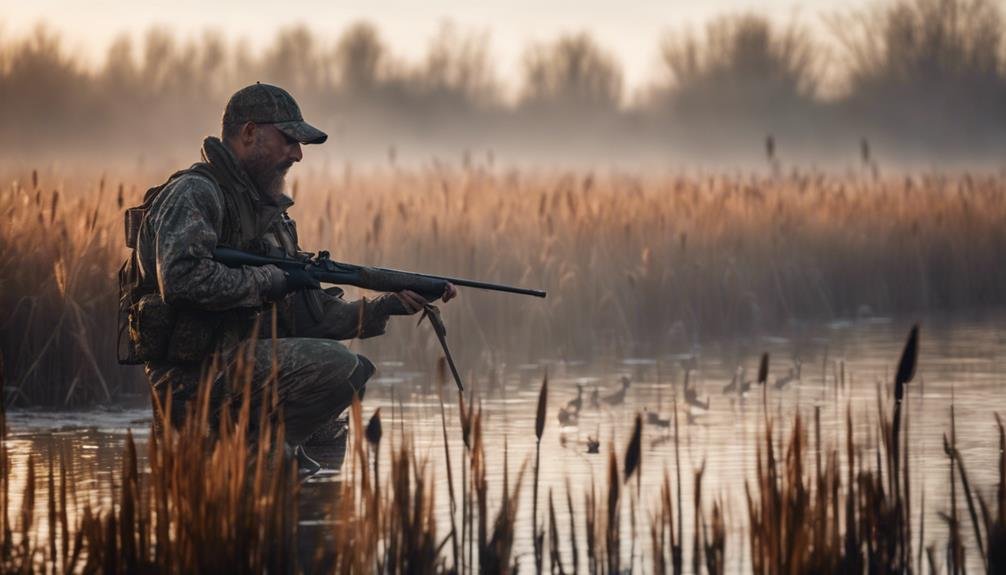
To become a waterfowl warrior, mastering the art of hunting requires a deep understanding of species habits, habitats, and behaviors, combined with strategic tactics, expert knowledge, and respect for the game and the environment. It's not just about camouflage and decoys; it's about anticipating migration patterns, recognizing species traits, and adapting to shifting habitats. By embracing the complexities of waterfowl hunting, you'll refine your skills and elevate your game. From goose hunting strategies to duck hunting tactics, there's more to discover – and the secrets to a successful hunt await just beyond the next wetland…
Key Takeaways
- Mastering goose hunting strategies, understanding migration patterns, and respecting fellow hunters and the environment increases chances of a successful hunt.
- Adapting duck hunting tactics to shifting waterfowl migration patterns and understanding unique characteristics of puddle and diver ducks is essential for success.
- Recognizing distinct traits and habits of waterfowl species, such as flocking behavior and migration patterns, enables development of effective hunting strategies.
- Combining the right gear with expert knowledge from reputable resources like MeatEater increases chances of a successful hunt and staying ahead of regulations is essential for a successful hunting season.
- Effective hunting techniques, including decoy placement, blind concealment, and season scouting, require a deep understanding of waterfowl behavior and habitats.
Waterfowl Hunting Essentials
Waterfowl hunting, a pursuit that demands meticulous planning and execution, is a far cry from a luck-of-the-draw endeavor, where success hinges on outsmarting these cunning creatures rather than relying on chance. As responsible hunters, we must uphold hunting ethics, prioritizing respect for the game, the land, and fellow hunters. Waterfowl conservation efforts, such as habitat preservation and species management, are vital to ensuring a thriving population for future generations. A well-trained bird dog can be an invaluable asset, but it's equally important to find a knowledgeable hunting mentor to guide you through the complexities of waterfowl hunting. By combining skill, strategy, and a deep respect for the sport, we can elevate our hunting experiences and contribute to the long-term sustainability of this beloved tradition.
Mastering Goose Hunting Strategies
By honing in on the unique characteristics and habits of Canada and snow geese, hunters can develop targeted strategies to outsmart these cunning birds and fill their bags with success. Understanding their migration patterns, habitat preferences, and social behaviors is essential. For instance, during the goose migration, these birds often follow established flyways, making it vital to set up near these routes. Additionally, hunters should prioritize hunting etiquette, respecting fellow hunters and the environment. This includes avoiding overcrowding, keeping a safe distance, and adhering to local regulations. By mastering these strategies, waterfowl warriors can increase their chances of a successful hunt, while maintaining a positive and respectful hunting experience.
Duck Hunting Tactics Uncovered
While puddle ducks and diver ducks may seem like vastly different beasts, savvy duck hunters know that understanding their unique characteristics and behaviors is key to filling the bag with these feathered friends. From the subtle differences in their wingbeats to their distinct feeding patterns, each species presents a unique challenge.
| Duck Species | Habitat | Hunting Tactics |
|---|---|---|
| Mallard | Wetlands | Decoy spreads, calling |
| Canvasback | Open water | Long-range shots, retrieval |
| Wood Duck | Timber | Tree stands, ambush |
As waterfowl migration patterns continue to shift, hunters must adapt their strategies to stay ahead of the game. Hunting ethics demand that we respect these birds and the environment, ensuring a sustainable future for waterfowl hunting. By mastering the intricacies of duck behavior and habitat, you'll be well on your way to becoming a waterfowl warrior.
Understanding Waterfowl Species
Among the dozens of duck and goose species available for hunting nationwide, understanding the unique characteristics, habits, and habitats of each is essential for success in the field.
- Imagine a flock of snow geese migrating in a V-formation, their honking calls echoing across the landscape as they fly in unison.
- Picture a mallard drake's vibrant green head glistening in the morning sun as it swims in a serene wetland.
- Envision a Canada goose's aggressive defense of its territory, hissing and flapping its wings to ward off predators.
Understanding waterfowl species means recognizing their distinct traits, such as flocking behavior and migration patterns. By doing so, hunters can develop effective strategies to outsmart their quarry and fill their bags with these feathered foes.
Effective Hunting Gear and Resources
From camouflage-clad hunters to waterfowl warriors, having the right gear and resources is essential to outsmarting these feathered foes and filling the game bag. Effective hunting gear and resources can make all the difference between a successful hunt and a disappointing one. Regular Gear Maintenance is vital to guarantee that your equipment is in top condition. Resource Optimization is key to maximizing your hunting experience. Invest in high-quality gear from reputable brands like First Lite, and stay informed with resources like MeatEater. Stay up-to-date on regulations, species profiles, and hunting tips to stay ahead of the game. By combining the right gear with expert knowledge, you'll be well on your way to becoming a waterfowl warrior.
Species Profiles and Hunting Tips
When it comes to successfully hunting waterfowl, understanding the unique characteristics, habits, and habitats of each species is essential, and that's where species profiles come in – providing hunters with the knowledge they need to outsmart their feathered quarry. By studying species profiles, hunters can anticipate waterfowl migration patterns, identify preferred habitats, and develop effective hunting strategies.
Imagine stalking a flock of Canada geese** as they descend onto a snowy field, their honking calls echoing through the crisp winter air.
Picture yourself wading through a misty marsh, surrounded by the whispers of wood ducks** and the soft lapping of water against the shore.
- Envision the thrill of flushing a covey of mallards from a hidden pond, their iridescent feathers glimmering in the morning sun.
Staying Ahead of Regulations
Sixty days prior to the start of each waterfowl hunting season, the U.S. Fish and Wildlife Service releases its annual harvest survey, providing hunters with a key snapshot of population trends and regulatory updates that can make or break a successful hunting season. As a waterfowl warrior, staying ahead of regulations is essential. Verify you're up-to-date on licence requirements, bag limits, and any changes to hunting seasons. Don't get caught off guard by unexpected changes – stay informed and plan accordingly. Remember, regulations vary by state and species, so do your due diligence to avoid costly mistakes. By staying ahead of regulations, you'll be well on your way to a successful and enjoyable hunting season.
Advanced Hunting Techniques
To elevate their waterfowl hunting game, seasoned hunters often employ advanced techniques that go beyond the basics, incorporating clever tactics and clever disguises to outsmart their feathered quarry. These masters of the marsh understand the importance of Decoy Placement, strategically arranging their spreads to mimic natural bird behavior. They also prioritize Blind Concealment, cleverly camouflaging their hideouts to remain undetected.
- Season Scouting allows them to anticipate and prepare for bird migrations, while Pattern Recognition helps identify habits and habitats.
- Hunting Mentors provide valuable insights, sharing expertise on everything from Bird Behavior to ideal gear selection.
- By mastering these advanced techniques, waterfowl warriors can stay one step ahead of their quarry, consistently bringing home the bacon – or rather, the duck.
Frequently Asked Questions
What Are the Most Effective Decoy Spreads for Early Season Ducks?
For early season ducks, deploy decoy spreads with a "U" or "J" shape, placing most decoys in the center, and adjust according to wind direction, using decoy placement strategies and spread adjustment techniques to optimize hunting success.
How Do I Pattern My Shotgun for Optimal Waterfowl Hunting Performance?
As the sun rises over the marsh, the hunt begins. To pattern your shotgun for ideal waterfowl hunting performance, consider choke selection and barrel length, as a tighter choke and longer barrel can improve your shot's accuracy and range.
Can I Use the Same Calls for Geese and Ducks?
When it comes to calls, species specificity is key; using the same calls for geese and ducks can be ineffective, as each species responds to unique vocalizations and call techniques, requiring tailored approaches for maximum results.
What's the Best Way to Store and Transport Harvested Waterfowl?
When it comes to storing and transporting harvested waterfowl, consider investing in cooler options and bag innovations, such as insulated game bags and vacuum-sealed containers, to keep your prize fresh and protected during transport.
Do I Need a Special Permit to Hunt Waterfowl on Public Land?
When hunting waterfowl on public land, a special permit or license may be required, depending on the state and land management regulations, so it's essential to research public access rules and land management restrictions beforehand to ensure a successful and legal hunt.
Conclusion
Waterfowl hunting, a symphony of skill, strategy, and adaptation, demands mastery of the quarry and the environment. Like a conductor leading an orchestra, a skilled hunter harmonizes tactics, gear, and knowledge to outwit the wariest of waterfowl. Consider the Mallard, a duck so cunning it can recognize and avoid hunters' decoys after just one encounter. By embracing the nuances of waterfowl behavior and staying attuned to the ever-changing environment, hunters can orchestrate a successful hunt, outsmarting even the most elusive quarry.