
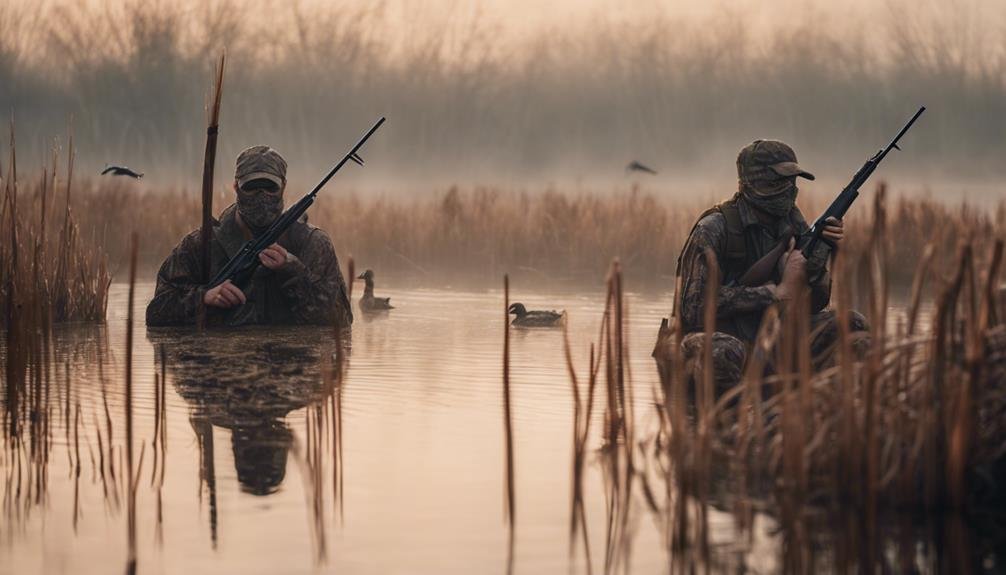
As wood duck hunting season approaches, savvy hunters know that pinpointing areas of high concentration requires a deep understanding of habitat diversity, water quality, and the wood duck's affinity for specific food sources and habitats. Successfully locating wood ducks relies on identifying habitat diversity, water quality concerns, and understanding the species' behavior. To capitalize on this knowledge, hunters must employ precise scouting strategies, clever decoy placement, and stealthy concealment techniques. With a well-planned ambush, hunters can increase their chances of bagging wood ducks. But, there's more to uncover – the strategies and secrets that separate the pros from the novices.
Key Takeaways
- Understanding wood duck behavior and habitat diversity is crucial for a successful hunt, as they thrive in areas with abundant food sources and diverse habitats.
- Scouting and locating wood ducks in traditional habitats like beaver dams, logs, and oxbow lakes increases chances of finding them.
- A well-planned ambush in areas with abundant nut and grain supplies, set up strategically with decoys, is key to a successful hunt.
- Hunters should prioritize camouflage and concealment, using facial camouflage, tree concealment, and strategic positioning to get up close and personal.
- A patient and calculated hunting mindset, combined with precise shooting and adaptability to wood duck behavior, makes the difference between success and failure.
Food Sources and Habitats
Wood ducks are drawn to habitats that offer an abundance of their favorite foods, including smartweed, duckweed, acorns, beech nuts, black gum tree fruits, and duckweed, which they forage for in beaver dams, logs, oak bottoms, oxbows, and silage fields near rivers. These habitats provide the necessary habitat diversity, allowing wood ducks to thrive. However, water quality concerns can impact the availability of these food sources, making it essential to prioritize conservation efforts. By understanding the importance of habitat diversity and addressing water quality concerns, wood duck hunters can better identify areas of high concentration, increasing their chances of a successful hunt. By focusing on these critical factors, hunters can develop a deeper appreciation for the intricate relationships between wood ducks and their habitats.
Scouting and Locating
As the hunt approaches, pinpointing the exact location of these elusive birds becomes a crucial aspect of success, and a thorough scouting effort is essential to uncover the hidden haunts where wood ducks congregate. Understanding wood duck behavior is key to successful scouting. They often associate with habitats that provide their favorite foods, such as nut-rich forests or grain-filled fields. To increase your chances of finding them, target traditional habitats like beaver dams, logs, and oxbow lakes. Local deer hunters can be a valuable resource for finding wood duck spots. Keep a hunting journal to record your findings, noting the time of year, weather conditions, and wood duck behavior. By doing so, you'll be well-equipped to pinpoint their exact location and set yourself up for a successful hunt.
Hunting Strategies and Tactics
When the morning mist lifts, a well-planned ambush can make all the difference in bagging these elusive birds, and a nuanced understanding of wood duck behavior is crucial to developing a winning strategy. To succeed, hunters must adopt a patient and calculated hunting mindset, capitalizing on the wood duck's affinity for specific habitats and food sources. By targeting areas with abundant nut and grain supplies, and setting up decoys strategically, hunters can increase their chances of success. A keen understanding of wood duck behavior, combined with a stealthy approach and precise shooting, can make the difference between a successful hunt and a fruitless endeavor.
Gear and Equipment Essentials
What separates the triumphant wood duck hunter from the frustrated novice is often a well-curated arsenal of gear and equipment, carefully selected to withstand the unforgiving wetland environment. A well-stocked gear bag is essential for a successful hunt. These essentials make a difference:
| Gear | Description | Price |
|---|---|---|
| Waterproof Backpacks | Keep gear dry in wet conditions | $80-$150 |
| Insulated Waders | Stay warm and dry in cold waters | $150-$300 |
| Water-Resistant Binoculars | Clear visibility in wet conditions | $100-$200 |
Investing in high-quality gear guarantees a comfortable and successful hunt. Waterproof backpacks keep essential items dry, while insulated waders keep you warm and dry in cold waters. Water-resistant binoculars provide clear visibility, even in wet conditions. By investing in these essentials, you'll be well-prepared for a triumphant wood duck hunt.
Early Morning Ambush
Early morning's eerie silence is shattered by the wood duck's high-pitched whistle, signaling the start of a new day and an opportunity to set up an ambush in the perfect spot. As the morning silence gives way to the dawn patrol, wood duck hunters must be ready to capitalize on this pivotal time. It's during these early hours that wood ducks are most active, and a well-executed ambush can yield impressive results. By setting up in prime locations, such as beaver dams or oak bottoms, hunters can increase their chances of bagging these elusive birds. With the morning silence broken, it's time to get into position and wait for the wood ducks to come to you.
Decoy Placement and Setup
As the morning light creeps over the water, strategically placing decoys in a wood duck's preferred habitat can make all the difference in enticing these wary birds into shooting range. Decoy visibility is key, so vital to position them in a way that allows the wood ducks to spot them from a distance. A well-designed spread pattern is vital, with decoys placed in a natural, relaxed manner to simulate a peaceful feeding scene. Consider using 5-7 decoys, spaced 10-15 feet apart, with a mix of feeding and resting poses to create a lifelike atmosphere. By placing decoys in areas with good cover, such as beaver dams or submerged logs, you'll increase the likelihood of attracting wood ducks and getting them within shooting range.
Camouflage and Concealment
While concealing oneself amidst the wood duck's habitat is essential, mastering the art of camouflage and concealment is essential to getting within shooting range of these wary birds. Facial camouflage is imperative, as wood ducks have exceptional eyesight. A well-designed facemask can help blend in with the surroundings, allowing hunters to get up close and personal. Tree concealment is also necessary, as wood ducks often perch in trees. Hunters should position themselves behind a tree trunk or a thick branch, using the natural cover to remain hidden. By combining facial camouflage with tree concealment, hunters can increase their chances of getting a shot at their prized quarry.
Field Etiquette and Safety
Beyond the trees, a hunter's responsibility extends to respecting fellow outdoorsmen and prioritizing safety, as a careless mistake can have far-reaching consequences in the wood duck's habitat. Hunter etiquette is essential in maintaining a positive atmosphere among hunters and ensuring a safe hunting environment. Always be mindful of your surroundings, keeping a safe distance from other hunters and avoiding accidental shots. Gun safety is paramount, with a focus on muzzle control, trigger discipline, and proper storage. Respecting private property and following local regulations is also vital. By adhering to these guidelines, wood duck hunters can enjoy a safe and enjoyable experience while preserving the integrity of the wood duck's habitat.
Frequently Asked Questions
What's the Best Way to Store My Wood Duck Hunting Gear?
For ideal gear organization, invest in climate-controlled storage units and waterproof cases to protect your gear from the elements. Utilize storage racks to keep equipment off the floor, ensuring easy access and preventing damage.
Can I Hunt Wood Ducks With My Retriever on a Lease?
When hunting wood ducks with your retriever on a lease, guarantee thorough Retriever Training to respect Lease Boundaries, avoiding conflicts with neighboring hunters and preserving the delicate ecosystem of your hunting grounds.
Will Wood Ducks Respond to Recorded Calls?
'Will wood ducks respond to recorded calls? Absolutely! In fact, a well-timed, eerily realistic call can be like a siren's song to these ducks, exploiting their innate duck psychology and prompting them to swoop in with reckless abandon, making call effectiveness a vital factor in a successful hunt.'
How Do I Handle a Wounded Wood Duck?
When handling a wounded wood duck, prioritize minimizing duck trauma by moving calmly and carefully. Gently grasp the bird, taking care to support its body and wings. Clean wounds promptly with saline solution to prevent infection, and seek veterinary care if necessary.
Can I Hunt Wood Ducks on Private Land Without Permission?
"Before creeping onto private land, remember: permission is key. Don't risk trespassing; instead, build relationships with private landowners to gain access, ensuring a harmonious hunt and preserving land access for future wood duck enthusiasts."
Conclusion
In the domain of wood duck hunting, mastery lies in the subtle dance between strategy and stealth. As the veil of dawn lifts, these elusive birds unfold their secrets to those attuned to their whispers. With habitats and feeding habits deciphered, the stage is set for a symphony of strategy and deception. By heeding the ancient rhythms of nature, hunters may orchestrate a brief, shining moment of triumph, where skill and cunning converge.